2014年3月25日星期二

10 Simple Poker Tells You Can (Usually) Bank On

Tells and poker – a pseudo-science which sometimes seems to work and sometimes seems to not hit the mark at all.
To start with, most amateur poker players have the wrong ideas about which tells to look out for.
Have you ever seen Rounders and Teddy KGB eating an Oreo? Well, Matt Damon obviously could tell by the way Teddy ate his cookie exactly how strong his hand was.
That's just one of the examples that just don't work outside of movies.
In most cases tells are contradictory and inconsistent and do not reveal enough information to solely base a play on.
Many experts have written books and articles about tells. Most of them are too broad to actually be useful or they're too narrow and you'll rarely find an opponent exposing this specific tell.
PokerOlymp's Jan Meinert shares 10 tells which (at least in most cases) "work" -- if you're playing against weaker marked cards players who don't have a lot of live experience under their belt.

1. Weak Means Strong
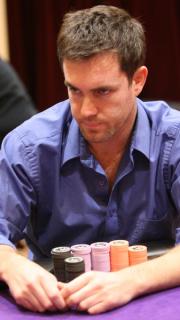
Gabe Costner
A gloomy face can be revealing.
This is one of the best known poker tells and it's seen very often among new players.
Players that act weak usually have a strong hand. Sighing, shrugging or a gloomy face very often indicate a very strong hand.
It's a natural instinct when attempting to conceal a big hand to try and appear weak. A player shrugging and raising usually has a strong hand, so don't fall for that trap!

2. Straightened Posture

A player who straightens his posture to play a hand or while in a hand usually has something he's at least interested in.
More often than not he even has a very strong hand and is getting ready to pull out the big guns.

3. Abrupt Silence or Flood of Words

A player who normally talks a lot and suddenly becomes silent usually has been dealt a very good hand.
The same holds true for players that usually don't talk but all of a sudden start to babble after getting dealt a hand.

4. Sound of the Voice

Players wearing hoodies or sunglasses might feel protected from giving away tells, but in fact they're not.
Often the sound of their voice tells a lot about their hand. Players holding a strong hand have an easier time talking juice cards and answering questions.
Players that bluff are often scared to give away a tell and sound insecure.

5. Impatience

A player suddenly waking up and getting impatient during a hand often indicates a strong holding.
Asking questions like "who's turn is it" and prompting the dealer to continue indicate the player is in a hurry to rake in a nice pot.
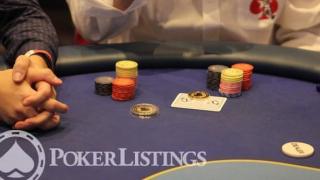
chips
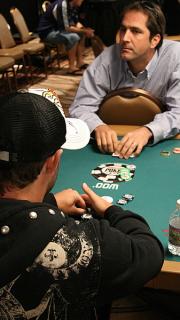
A simple chip on the cards could say a lot.

6. Hole-Card Protection

This tell is really simple: Some players actually fall for the trap to protect their hole cards (by putting a chip on top of them) if and only if they are at least fairly strong.
This tell should by all means be exploited to the maximum.

7. Splashing Chips

A player pounding out a bet or splashing chips very often has a weak hand and is trying to cover up for this by acting extra strong.
If a player uses a little bit more force than he usually does when placing his chips, he's usually making a bluff.

8. Fumbling and Glancing

A player who, after seeing his hole cards, immediately glances at his chips or starts to fumble with them usually has a very strong hand.
Right after seeing his hand he's thinking about the upcoming bet sizing and thus involuntarily looks at his chips.
The same holds true if a player looks at his chips right after the flop has been dealt. It means the flop has helped his hand and he's getting ready to fire up the action.
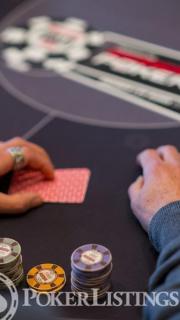
Chips
Beware of the freeze.

9. Bet Sizing

Here's a tell that works without looking at the other players: Weak players often have problems with bet sizing and their bets show exactly how strong their hand is.
Big cards mean big bets, small cards mean small bets. It's that simple.
If a player repeatedly bets a tiny fraction of the pot with his weak hands, you can be sure he has a monster when he suddenly pulls out the big guns.

10. Freezing

A player who freezes after placing a bet is bluffing very often.
It's not easy to talk when you're bluffing. You're afraid to trigger a call by something you say or with a gesture. So a player who is bluffing often refrains from talking and moving, sometimes even breathing.
This tell also works the other way around: a player who is very talkative after placing a bet usually has it.
He's trying to lure in a call by any means possible and trying to keep you interested in your hand.

2014年3月7日星期五

Sit-and-Go Essentials Part 4: Heads-Up

In parts one, two and three of this series we went over the skills you need to put yourself in a position to play for the win.
If you read those articles and apply the techniques properly, you'll absolutely find yourself playing for first a whole lot more than you have previously.
But once you get to the end game, you still need to seal the deal.
You've learned all the tools; now you just have to apply them one-on-one. So our focus in part four is heads-up play.
Still Room to Exploit Your Edge
Unfortunately, the way most sit-and-gos are designed online, by the time you get to heads-up play the blinds are so big the game doesn't allow for much play.
I hope you've accumulated some chips, because if the chips are even it will be a very tight match.
Neither marked cards player will hold much of an edge over the other because of the structure.
The match usually comes down to whoever gets the best cards in the shortest period of time.
That's not to say it's completely out of your hands though; there's still room for you to exploit your edge.
Watch Your Hand Values
When you're heads-up, hand values change from what they were pre-flop in the earlier stages.
Depending on how aggressive your opponent is playing, it may be +EV to get any ace in pre-flop.
Phil Gordon, Erik Cajelais
If your hand is decent shorthanded, it's a monster heads-up.
 
Think of it this way: if your hand is decent when the game is short-handed, then it's a monster heads-up.
Pocket pairs are very robust. Hands are usually won with just one pair at showdown, so if you are dealt one before the flop then you're already ahead of the game.
Hands that also increase in value are big broadway hands, like K-Q, K-J, Q-J, K-T, etc. - ones that when they hit the flop make top pair with a good kicker.
Top pair is a massive hand heads-up and it's almost always worthy of getting all-in.
Hands that decrease in value are weak trick cards speculative hands, like low suited connectors.
While they may be decent hands to raise with as a steal, they should not be played against a raise.
These hands dramatically drop in value when the stacks are short.
Even if you flop a draw, there's little money to get paid off with. When they do hit the flop, they usually make weak second-pair type hands or gut-shot draws.
Nothing you'd want to risk your tournament life on.
An Example:
You have $6,250 and so does your opponent. Blinds are $250/$500.
You're in the small blind/button with J T and raise to $1,800. Flop comes J 6 3. Your opponent bets $3,200.
What should you do? Shove.
That's it, that's all.
This is the crux of heads-up poker in a sit-and-go.
The blinds are too big and there's so little play that if you flop top pair, you're destined to get it all-in.
Another Example:
You have $6,250 and so does your opponent. Blinds are $250/$500.
You have Q J in the small blind/button and raise to $1,800. Your opponent calls. The flop comes down T 2 9.
Your opponent checks and you bet $3,000. Your opponent shoves.
You? Call.
You have two overcards and an open-ended straight draw. You only have $1,450 in your stack and there's $11,050 in the pot.
To put it bluntly, you're pot-committed.
Building a Mountain
Continue pushing hard when in position.
 
Luckily you have a massive draw and are getting great odds. It's hands like these your tournament will come down to.
You should of course, as always in poker, be exploiting your position to the max. Continue pushing hard when in position.
Don't stop stealing or slow your aggression just because you're heads-up - the game is not over until it's won.
So stay on your toes and keep up the fight.
Remember if you always make decisions as best you can, you'll make money in the long run no matter what happens in the short term.
Just look long-term and always try and make the most +EV play you can.
* * * * * * * * * *
Well, that brings this four-part guide to becoming a sit-and-go champion to a close.
It's by no means comprehensive - I wrote it for the average player who understands poker but wants to take his or her sit-and-go game to the next level.
I hope it's given you enough information to go from merely playing sit-and-gos to understanding what it takes to be a serious winner.

2014年2月23日星期日

Seven Best Things About Full Tilt Poker Return

After being absent from the poker world for over 16 months, Full Tilt Poker is scheduled to re-open in non-U.S. jurisdictions tomorrow.
In the time since Full Tilt went offline we’ve seen the rise and fall of the Epic Poker Tour, Phil Hellmuth finish second in the WSOP POY race in back-to-back years and the migration of U.S. online poker players to countries where they can still play.
In short: a lot has happened.
It’s been so long and there’s been so much controversy it’s easy to forget what made Full Tilt Poker great in the first place..
Obviously the best thing about Full Tilt Poker’s return is that marked cards players (at least European ones) will finally be getting access to their account balances.
Outside of that here are the seven items that have us excited about the Full Tilt Poker revival.

7. Best Looking Software in Poker

Despite over a year without upgrades there is something timeless about the look of the Full Tilt software..
It’s simple but not boring. It scales well and runs fast. It feels like professional-grade software compared to the amateur offerings from rivals.
Every feature of the software from the very functional lobby to the card animations has been carefully designed.

6. Nosebleed Cash Games

Viktor Blom
The second coming?
There’s a good chance you don’t actually play the nosebleed high-stakes games on Full Tilt Poker but they are damn fine entertainment.
The actual Full Tilt team has been cut down to Gus Hansen, Tom Dwan and Viktor “Isildur1” Blom but there’s a good chance it won’t take long for players like Dan “jungleman12” Cates, Phil “OMGClayAiken” Galfond and Patrik Antonius to return to the site where they made names for themselves.
The high-stakes games on Full Tilt Poker were legendary and Isildur1 brought the poker world to a standstill when he went on his record-setting multi-million dollar swing in the fall of 2009.
Some of the high-stakes action has since moved to PokerStars but we're guessing that Gus Hansen and Viktor Blom can convince more than a few pros to take a crack at Full Tilt's elite games.
Full Tilt, high-stakes online poker and Rail Heaven will always be synonymous.

5. Best Avatars in Poker

Yeah this one is pretty subjective and we tend to play with avatars hidden.
But ninja, surfer guy and wizard are arguably more famous than some of the former lesser-known red pros on FTP.
After spending some time playing play money over the last week it looks like all the avatars will be returning to FTP.
Remember, Surfer Guy is a calling station.

4. Full Tilt Poker to PokerStars Transfers

The whole Full Tilt situation since Black Friday has been a complete and utter mess.
Countless players have had countless sleepless nights wondering when, and if, they would ever get their money back.
Stars Full Tilt chop
The future is bright.
There is at least one positive to come out of the situation: Full Tilt Poker to PokerStars transfers.
Being able to transfer cash between the two biggest online poker sites in the world is pretty awesome no matter how you look at it.
Want to take a shot at the high-stakes cash games on Full Tilt after binking a tournament score on PokerStars? Done.
Need some extra cash on PokerStars to make SuperNova Elite? Fine. It’s a whole new world.

3. Custom Tables, Lobby and Interface

Despite its signature look, Full Tilt Poker was also one of the easiest poker clients to mod and some players had fantastic custom set-ups.
First of all Full Tilt offers the ability to change the lobby thanks to its configurable widgets.
matrix table
Matrix Full Tilt table
You can go even more in-depth, however, and completely change the entire Full Tilt experience.
With a little technical know-how it was possible to modify logos, avatars and backgrounds to create awesome custom creations.
Check out our How to Mod Your Full Tilt Poker Client article to see how to customize your Full Tilt client.

2. Rakeback

OK, while it’s true that the traditional affiliate-based rakeback offered by Full Tilt in the past won’t be returning easy cards tricks, the new Edge program has the potential to be lucrative in its own right.
Edge is a pretty simple cash-back program where there are five different status levels including bronze, silver, gold, platinum and diamond.
Make it to silver and you’ll start earning $1 every week for every 100 Full Tilt points earned. If you make it all the way to diamond status you’ll receive $2.50 for every 100 Full Tilt points earned.
The program is universal so every player has access to it. That’s cash being deposited directly into your account every week.
The end result works out to be 10-25% rakeback and while that’s not as good as the old 27% rakeback, once you add other bonuses into the equation, there are still some good deals to be had on Full Tilt.

1. Rush Poker

Here we go.
The market has been inundated with fast-fold poker games but Rush Poker remains the original, and best, version.
Full Tilt also offers Rush MTTs, which is something the rest of the industry hasn’t quite caught up to yet.
The old Rush On Demand tournaments started when a set number of players had signed up, like a Sit & Go, but players could then register late to create massive prizepools.
The $4.40 On Demand Rush tourney always seemed particularly soft and multi-tabling On Demand tournaments was a create way to crank out FTPs.
It's time to get busy.

2014年2月16日星期日

The Final Hour

OK, so the title sounds a bit apocalyptic. That's all right; I thought it might help get your attention.
Of course, the final hour of a poker session is less cosmic and certainly less dramatic than it would be in a sci-fi novel or an end-of-the-world movie.
But most players have no idea how dangerous that final hour can be.
More Mistakes and More Grief Than You Can Imagine
Over the years I have watched more players make more mistakes, cost themselves more money and self-inflict more grief during these final 60 or so minutes than you can imagine.
There are psychological reasons for this and if we understand them perhaps we can prevent future occurrences.
I hope you noticed that "we" in the preceding - that's because I include myself in that category of those who've screwed up during the last couple of orbits before cashing out.
This isn't a traditional strategy column, but the issue is deeply strategic.
If you follow my advice it will serve you well in the future, as well as someone whispering in your ear, "Dump those wired jacks after you got raised and the big blind came over the top."
How the Final Hour is Different
In the final hour, the money creeps in.
The final hour in a poker session is different from all others simply because we begin to contemplate, with special poignancy, the state of our bankrolls.
We become acutely aware of just how far behind or ahead we are marked cards.
Of course, we pay attention to stack sizes constantly, but as the sands run down we add a mental footnote:
"Hmmm, I'm down/up X coconuts (or whatever you play for) and only another hour or so to do something about it."
The something has a lot of variations.
If we're down, we think about how to get out on the night. If we're up, about how to either hold on and book a "W" or take down a monster and make it a "session to remember."
There are other, specialized variations, of course, like the guy who sees he needs 18 more chips to fill a rack. Or the one who has 16 greenies and really, really wants to fill that slot.
All are trouble, and all invite you to make stupid decisions.
See if these scenarios don't feel just a tad familiar:
  1. You're in the SB, stuck two buy-ins and seething. You've got to meet your bud in a half-hour. You're in middle position. A tight-aggressive player open-raises four BBs. It's folded to you. You think, "Hmm, 6-7o is a hand just made for felting this clown..."
  2. You're stuck three buy-ins. The plane is revving up on the runway. You're UTG with JJ. You raise; tight mid-position player re-raises; button goes over the top all-in and you... hmmm, didn't we cover this one already?
  3. You're up 20 BBs on the night. You've got the button; a maniacal type raises 3x the BB. The next six players call; you dump your 8-9s 'cause you really don't want to get caught up in a hand that could make you a loser on the evening.
  4. You're just about even. You've got pocket fives in mid position. It's folded to you and you fold, even though you can see the next two players on your right getting ready to limp.
In these, and a dozen other plot lines you can imagine or extract from your long-term memory, you have made an awful decision.
And, in each case, you almost certainly would not have played the hand this way if it were not The Final Hour.
Track your records.
In the first two you're unrealistically forcing a hand in the hope you can "get out" on the day.
In the latter two you're playing like a wuss 'cause you're afraid to end up having to go home a loser.
How To Avoid Traps
So how do you stay out of these traps?
There's a bunch of ways, but here's the key: keep long-term, cumulative records.
If you only log wins and losses in individual sessions, it makes you focus on the bottom line for that session only.
But this is silly. This isn't how you keep track of your personal finances.
If you're in business, you couldn't survive this way. There will always be good days and bad ones too.
The stock market jumps 200 points one day and slips 150 the next. Orders are up on Monday and down on Tuesday.
Business booms in the summer but slows down in the winter. But you don't run about like some kind of nut trying to make a profit every day.
You take a long view. Is the market up over a month period? Did I turn a profit in the last quarter, or the fiscal year?
Are you up for the year? For life?
Are You Up for Life?
This is how you should approach poker juice cards.
You want to know if you're up or down, not today, not this week, but over the course of at least several months and, ideally, your life!
If you've been playing a $1-$2 NL game for nine hours and are $400 in the hole, don't even think about "getting even" for that session.
View it in the larger context. Are you ahead or behind that game for the month, the past three months, the year?
If you keep ongoing records you may discover you're ahead a couple of bucks on the year, even with the $400 hit.
So there's no reason to start steaming in order to get even. You already are!
Same logic applies when you're ahead. If you're up $470, you do not need to do something intensely stupid to try to pick up a $30 pot to fill the rack.
In fact, forget the 20-chips-per-stack gimmick. Stick your chips in the rack in uneven stacks and let the cashier count it out.
If you've got $2,425 in green chips and absofreakin'lutely have to have a full rack, buy three more from the dealer, take those Jacks, dig a hole and toss 'em in.
OK, this makes sense and it's simple. Right?
Well, yes and no.
It turns out we also need to look more closely at those words "win" and "lose."
In a later article I'm going to argue they often involve more than just money; there's a psychological coin to be factored in. Join me then.

Handling Stress in the Poker Wars Part 2

Recently we looked at frustration and stress and their physiological and psychological impacts on us - in particular when our poker lives don't go quite as we'd like them to.
My focus was on different reactions to stress and some simple tricks to cope with it.
Here, I want to take a longer look at stress and the emotions that accompany it, and delve deeper into what goes on inside your mind and body at the poker table.
Yeah, I know, I know; it's the ol' professor bit again. Sorry, I can't help myself. But hang in with me here. You may learn something to help your game.
Let's start with two key points:
1. Stress isn't necessarily bad, it's just another emotion.
2. You can feel very different emotions from the same amount of stress.
I know, those sound so bloody cryptic, but don't you dare move the mouse toward the "back" button.
The story isn't that complicated, and it'll give you new ways to understand our game and new insight into why some of you may be better marked cards players than your peers in some cases but not in others.
Stress isn't necessarily bad, it's just another emotion.
As we noted before, the research shows that continuous high levels of stress are bad for you. However, things are a tad more complex than that.
There are times when stress is an important motivator. If it's high enough, people can do things unimaginable in "ordinary" situations.
Parents have ripped open the doors of flaming cars to rescue trapped children - and only later realized that they did it on a broken leg.
When the emotional levels get high enough, they can spur us on to do the most remarkable and wonderful things.
When emotional levels get high, strange things can happen.
But, on the other hand, do you want someone in the same state doing brain surgery on you?
Not me, baby. I want someone really stoked if my kid is in a burning auto. If she's wielding the surgeon's blade, I want her cool and calm.
And vice versa: The calm, relaxed demeanor the surgeon needs isn't worth much with a flaming wreck in an intersection.
To make this point clear, imagine it's the surgeon's kid in the burning car.
Adopt the Goldilocks Approach
In psychology these things are called "interactions."
How stress affects you depends upon (or "interacts" with) other things, like what task is before you.
The interaction between stress and the difficulty of the task has been known for a century and is called the Yerkes-Dodson law, after the two psychologists who did the early research.
Is there any advice buried here? Sure. Adopt the "Goldilocks" approach.
Like the heroine in the child's story you need to try to get everything "just right:" not too hot, not too cold, not to soft, not too hard.
If you're cranked, hyper-stoked, on a permanent adrenaline rush, your thinking is going to suck.
Conversely, if you sit there like a sick toad with no motivation to get involved, you'll be lacking appropriate aggression.
First related thought:
Ever wonder about good $5/$10 players who complain that they can't beat the $1/$2 game?
Whiners gonna whine.
Their stress levels are probably too low. Not enough pressure. They don't care.
Oh, they'll whine about one-outer easy cards tricks suck-outs and bluff-proof calling stations, but that's not the real reason.
They know what adjustments they need to make but for the most part, they just don't care enough. Surgeons in a rescue operation.
Second thought:
Ever wonder why winning $5/$10 players get smacked around when they move up to $10/$25?
Likely their stress levels are too high. Too much pressure. They care too much.
Of course they'll bitch about guys calling raises with 4-3s or moan about how lucky their opponents are, but again, they know how the game is played at this level.
The problem is that their emotions are cranked too high. Rescue workers doing surgery.
Fascinatingly, it can be the same player in both scenarios.
His knowledge of the game is the same. His decision-making ability hasn't changed.
If you asked, he could explain the strategic adjustments needed but, alas, he can't pull it off. He's lost the Goldilocks touch.
You can feel very different emotions from the same amount of stress.
Remember that experiment we discussed in that previous column?
If not, here's a quick refresher: People were given what they thought was a new drug to improve their memories. It wasn't (alas, there is no such drug); it was adrenaline.
Some waited in a room with a very funny and crazy character who told jokes, played games and generally had a ball; others were put in a room with an angry, depressed person who bitched and complained about everything.
Find the "just right" stress level.
Later, those in the room with the class clown were in a terrific mood and, interestingly, didn't think there were any side effects.
The others were depressed, anxious and reported a host of unpleasant side effects.
Same drug, dose and physiology. Different environments, different interpretations.
Simple Lesson for Poker Junkies
There's a simple but largely unappreciated lesson here for us poker junkies.
Your interpretation of your emotional state is as important as the emotions themselves.
Imagine you've traveled half way around the world to play with over a thousand others for a million-dollar prize; or made your pilgrimage to Vegas for the WSOP; or gotten an invite to an underground club in The Big Apple - the one where "KGB" sits in his undershirt waiting for you.
Me? Been there, done that and have always found myself with seriously heightened emotions.
Sometimes I felt upbeat, with a sense of anticipation, a desire to get in the game, a feeling that was so strong I could almost roll it around on my tongue.
Other times I was less sanguine about my prospects, experienced anxiety, a sense of dread - a quiet voice whispering "You're out of your league, sucker."
I'll bet you a rack of reds that I and the rest of you rubes out there have done better when we've managed to view the emotional arousal in a positive vein.
Remember Goldilocks
Poker advice: The next time you unrack your chips with a bunch of blood-sucking pros or find three "bracelets" at your table, remember Goldilocks.
It isn't anxiety or terror, the adrenaline rush is not a disguised death wish.
It's anticipation; you're energized, alert, mentally focused and as sharp as any surgeon.

2014年1月21日星期二

Make Money through Online Casinos

Online Casinos are considered to be among the most entertaining avenues you can use to earn money online. Online casino lovers flock regularly at various Casino sites in order to enjoy the game of life.


Money making through online casinos gambling is in the form of a game. You can gamble from the confines of your home and make as much money as you can. You can play bets and win money as you just in the live casinos out there. There are so many games available to enjoy in online casinos, among them include video poker, card games, Roulette, lotto.
However, you might be surprised to know that there are ways in which you can enjoy the games here without having to spend any money. In fact, enjoying the casino games without having to pay for it is probably one of the biggest gripes you can enjoy. With a free play online casino, you can always win some cash.
Online casinos can be played in various ways. There are two ways to play the games:
  1. Web Based
  2. Download Based
Web Based is actually called Online Casinos Gambling. You simply register and log on to a gambling site and start playing the game. Such type of game is played in the browser plug-ins such as: Macromedia Shockwave, Macromedia Flash or Java. Bandwidth is also needed to be able to get the sound, graphics and animations in the game. Games that are currently offered online are blackjack, roulette, baccarat, poker, slot machines, Pai Gow Poker and a lot more marked cards .
The Download based casinos can be downloaded right on your system. You simply install the game software and then hook up on the internet to play your favorite game each time you desire.
In order to play online, there are a few instructions you need to keep in mind:
  • A good and fast internet connection is a must for playing online casinos games.
  • The game can last for too long, thus you should not have any disturbing elements near you.
  • You should play these online casino games without any interruptions and slowness
  • You should have an ample time to play these online casino games because you love them.
  • You should turn off your cell phones, televisions, radio's etc.
  • There are always some free options in various online casino game sites. Thus, you should know which website is best to play on.
  • You should always make sure that the site which you choose to play is a trusted one.
  • Always start with a minimum amount deposits. Try out slowly and see how you like it.
  • Always read instructions before you start playing.
  • Always have a watch on the money you have in account.
Benefits of online casino gambling
Online casino is so popular that many people like to play the games. There 3 million people playing on various casino websites each week. It always offers trill and excitement to the players each time they play for the fun and earn. It's like an addiction that cannot go once you start making money through it. With the growing industry of online gambling on the internet, its popularity is growing day by day. Here are some benefits of online
infrared ink gambling:
  • Online casino gambling can be done right from the comforts of your home. You just need an internet connection and a computer to start earning your money provided you have access to the best and trusted gambling site.
  • Due to lots of competitions, various online casinos gambling sites do introduce diverse offers and prizes in order to encourage the players. At times they also provide players with some bonus for enhanced playing.
  • The Casino industry is very lucrative thus. If you know how to play the games according to rules, you can do wonders and earn lots of money as you play.
  • There are varieties of casino games to choose from. You simply locate the best that can suit you.
Indeed, there are lots of online casinos available on internet. You should always choose the trusted ones and get yourself registered. Go with the licensed sites. They are known to be very secured and safe.
The online casinos websites have very strict rules and regulation. You should not get over board and bet more than what you have in store or with your credit limit. You can't afford to lose more than what you have in your account. It is always better to have control over your emotions and playing styles.
In all, you have to be aware of crooks and fraudulent casino sites that are out there to dupe people. Always make sure you make proper inquiries before registering with any of the casino sites. You can always make huge money if you succeed in locating a trusted casino sites and if you also play the games according to rules. Spend some quality time to master the rules of each game you would like to play. Get onboard now and play your way to dollars through online Casinos.
Do you want to know more about making money online? Why not grab the latest eBook captioned "50 WAYS TO MAKE MONEY ONLINE".

A Primer on Macau - the Orient's Las Vegas

Macau's economy is based on tourism and gambling, much like its counterparts in the US – Las Vegas and Atlantic City. These three places, combined generate more revenue just from gambling than the total market cap of Bank of America and US Bank combined, in fact they don't even come close.

Here, we look at the key statistics at the "terrific three" gambling hubs
Las Vegas
---------
In Las Vegas has long been the world's gambling hub. High end casinos, unparalleled service and a large variety of entertainment options have kept tourists coming back marked cards to Vegas year after year. Leading properties include casinos run by MGM Mirage Inc., Harrah's Entertainment Inc., Las Vegas Sands Corp and the Wynn Resorts Ltd.
At close to $6.5 Billion in gambling revenues in Las Vegas alone and $12 billion total in the state of Nevada which includes the city of Reno, a smaller gambling hub, it is still arguably the world's largets gambling location, even though Macao has exceeded Las Vegas in the last year or so as the world's largest gambling hub.
Las Vegas overall economy, which includes revenue from tourism, gambling, entertainment and a host of other smaller businesses including conventions, revenue has been increasing 6.5% year after year and is about $110 billion now and is expected to reach $155 billion in 2012. No other location comes even close to that number.
2008, however, has been slower than usual, primarily due to the overall economic slowdown in the US due to the subprime mortgage crisis.
Atlantic City
-------------
Atlantic City's has11 casinos and has been the second biggest gambling hub in the US for several decades. Research studies however show that 2007 will be the first year for the drop in revenue, because of the tough competition in the gambling industry.
Many of the old casinos that were there in the Atlantic city have been shut down. The Trump Marina Hotel Casino had the biggest decline $11.8 million and recently Trump decided to sell this away as well. New casinos have started coming up though and it is unclear at this time what the future of Atlantic City would be.
Overall revenue casinos dropped 2.9% compared with 2006, but the decline in slots revenue was even sharper at 7.2%. The smoking ban, State imposed additional taxes, competition from casinos in neighboring states and the overall economic slowdown contributed to the slowdown. Despite these losses, Atlantic City generated $4.94 billion in gambling revenues in 2007, still a very strong number in the US. With new casinos coming up and the closure of the old loss-generating ones infrared contactlenses, Atlantic City seems to be poised for a comeback. Only time will tell.
Macau
-----
Gambling revenue in the enclave totaled 55.9 billion patacas in 2006, which includes lottery and racing revenues although the booming bulk came from casino floor.
This may exceed the 6.2$billion generated by Las Vegas strip. Gambling revenue in the enclave totaled 55.9 billion patacas ($6.95 billion) in 2006. VIPs related revenue was higher but the mass market was slightly lower.
At the end of 2006, Macau had 24 casinos operating 2,762 gaming tables and 6,546 slot machines. In the beginning of the year 2007, with the increase in the gambling revenue by 22% reaching US$ 6.95 billion, Macau would have dethroned Las Vegas to emerge as the world's #1 gambling destination.
The success story of Macau may be due to the fact that the visitors from the nearby areas in mainland China show more interest towards gambling compared to the Americans in Las Vegas, whose people aren't that interested in gambling in general.
Macau, the only place in China where the gambling is being made legal is within the reach of three billion people which positions it well for further growth, much better than Las Vegas and Atlantic City. It is already the world's largest gambling center by volume and may soon become the largest by revenues as well.