2014年3月25日星期二

10 Simple Poker Tells You Can (Usually) Bank On

Tells and poker – a pseudo-science which sometimes seems to work and sometimes seems to not hit the mark at all.
To start with, most amateur poker players have the wrong ideas about which tells to look out for.
Have you ever seen Rounders and Teddy KGB eating an Oreo? Well, Matt Damon obviously could tell by the way Teddy ate his cookie exactly how strong his hand was.
That's just one of the examples that just don't work outside of movies.
In most cases tells are contradictory and inconsistent and do not reveal enough information to solely base a play on.
Many experts have written books and articles about tells. Most of them are too broad to actually be useful or they're too narrow and you'll rarely find an opponent exposing this specific tell.
PokerOlymp's Jan Meinert shares 10 tells which (at least in most cases) "work" -- if you're playing against weaker marked cards players who don't have a lot of live experience under their belt.

1. Weak Means Strong
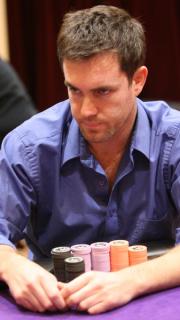
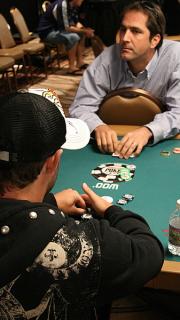
Gabe Costner
A gloomy face can be revealing.
This is one of the best known poker tells and it's seen very often among new players.
Players that act weak usually have a strong hand. Sighing, shrugging or a gloomy face very often indicate a very strong hand.
It's a natural instinct when attempting to conceal a big hand to try and appear weak. A player shrugging and raising usually has a strong hand, so don't fall for that trap!

2. Straightened Posture

A player who straightens his posture to play a hand or while in a hand usually has something he's at least interested in.
More often than not he even has a very strong hand and is getting ready to pull out the big guns.

3. Abrupt Silence or Flood of Words

A player who normally talks a lot and suddenly becomes silent usually has been dealt a very good hand.
The same holds true for players that usually don't talk but all of a sudden start to babble after getting dealt a hand.

4. Sound of the Voice

Players wearing hoodies or sunglasses might feel protected from giving away tells, but in fact they're not.
Often the sound of their voice tells a lot about their hand. Players holding a strong hand have an easier time talking juice cards and answering questions.
Players that bluff are often scared to give away a tell and sound insecure.

5. Impatience

A player suddenly waking up and getting impatient during a hand often indicates a strong holding.
Asking questions like "who's turn is it" and prompting the dealer to continue indicate the player is in a hurry to rake in a nice pot.
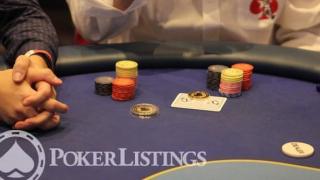
chips
A simple chip on the cards could say a lot.

6. Hole-Card Protection

This tell is really simple: Some players actually fall for the trap to protect their hole cards (by putting a chip on top of them) if and only if they are at least fairly strong.
This tell should by all means be exploited to the maximum.

7. Splashing Chips

A player pounding out a bet or splashing chips very often has a weak hand and is trying to cover up for this by acting extra strong.
If a player uses a little bit more force than he usually does when placing his chips, he's usually making a bluff.

8. Fumbling and Glancing

A player who, after seeing his hole cards, immediately glances at his chips or starts to fumble with them usually has a very strong hand.
Right after seeing his hand he's thinking about the upcoming bet sizing and thus involuntarily looks at his chips.
The same holds true if a player looks at his chips right after the flop has been dealt. It means the flop has helped his hand and he's getting ready to fire up the action.
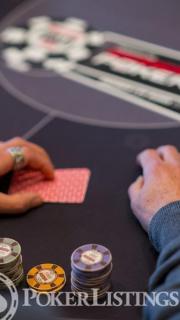
Chips
Beware of the freeze.

9. Bet Sizing

Here's a tell that works without looking at the other players: Weak players often have problems with bet sizing and their bets show exactly how strong their hand is.
Big cards mean big bets, small cards mean small bets. It's that simple.
If a player repeatedly bets a tiny fraction of the pot with his weak hands, you can be sure he has a monster when he suddenly pulls out the big guns.

10. Freezing

A player who freezes after placing a bet is bluffing very often.
It's not easy to talk when you're bluffing. You're afraid to trigger a call by something you say or with a gesture. So a player who is bluffing often refrains from talking and moving, sometimes even breathing.
This tell also works the other way around: a player who is very talkative after placing a bet usually has it.
He's trying to lure in a call by any means possible and trying to keep you interested in your hand.

2014年3月7日星期五

Sit-and-Go Essentials Part 4: Heads-Up

In parts one, two and three of this series we went over the skills you need to put yourself in a position to play for the win.
If you read those articles and apply the techniques properly, you'll absolutely find yourself playing for first a whole lot more than you have previously.
But once you get to the end game, you still need to seal the deal.
You've learned all the tools; now you just have to apply them one-on-one. So our focus in part four is heads-up play.
Still Room to Exploit Your Edge
Unfortunately, the way most sit-and-gos are designed online, by the time you get to heads-up play the blinds are so big the game doesn't allow for much play.
I hope you've accumulated some chips, because if the chips are even it will be a very tight match.
Neither marked cards player will hold much of an edge over the other because of the structure.
The match usually comes down to whoever gets the best cards in the shortest period of time.
That's not to say it's completely out of your hands though; there's still room for you to exploit your edge.
Watch Your Hand Values
When you're heads-up, hand values change from what they were pre-flop in the earlier stages.
Depending on how aggressive your opponent is playing, it may be +EV to get any ace in pre-flop.
Phil Gordon, Erik Cajelais
If your hand is decent shorthanded, it's a monster heads-up.
 
Think of it this way: if your hand is decent when the game is short-handed, then it's a monster heads-up.
Pocket pairs are very robust. Hands are usually won with just one pair at showdown, so if you are dealt one before the flop then you're already ahead of the game.
Hands that also increase in value are big broadway hands, like K-Q, K-J, Q-J, K-T, etc. - ones that when they hit the flop make top pair with a good kicker.
Top pair is a massive hand heads-up and it's almost always worthy of getting all-in.
Hands that decrease in value are weak trick cards speculative hands, like low suited connectors.
While they may be decent hands to raise with as a steal, they should not be played against a raise.
These hands dramatically drop in value when the stacks are short.
Even if you flop a draw, there's little money to get paid off with. When they do hit the flop, they usually make weak second-pair type hands or gut-shot draws.
Nothing you'd want to risk your tournament life on.
An Example:
You have $6,250 and so does your opponent. Blinds are $250/$500.
You're in the small blind/button with J T and raise to $1,800. Flop comes J 6 3. Your opponent bets $3,200.
What should you do? Shove.
That's it, that's all.
This is the crux of heads-up poker in a sit-and-go.
The blinds are too big and there's so little play that if you flop top pair, you're destined to get it all-in.
Another Example:
You have $6,250 and so does your opponent. Blinds are $250/$500.
You have Q J in the small blind/button and raise to $1,800. Your opponent calls. The flop comes down T 2 9.
Your opponent checks and you bet $3,000. Your opponent shoves.
You? Call.
You have two overcards and an open-ended straight draw. You only have $1,450 in your stack and there's $11,050 in the pot.
To put it bluntly, you're pot-committed.
Building a Mountain
Continue pushing hard when in position.
 
Luckily you have a massive draw and are getting great odds. It's hands like these your tournament will come down to.
You should of course, as always in poker, be exploiting your position to the max. Continue pushing hard when in position.
Don't stop stealing or slow your aggression just because you're heads-up - the game is not over until it's won.
So stay on your toes and keep up the fight.
Remember if you always make decisions as best you can, you'll make money in the long run no matter what happens in the short term.
Just look long-term and always try and make the most +EV play you can.
* * * * * * * * * *
Well, that brings this four-part guide to becoming a sit-and-go champion to a close.
It's by no means comprehensive - I wrote it for the average player who understands poker but wants to take his or her sit-and-go game to the next level.
I hope it's given you enough information to go from merely playing sit-and-gos to understanding what it takes to be a serious winner.